Four London Chefs on the challenges facing their kitchens and what’s working
At our first Chefs’ Lunch, Turning Up the Heat, four London Chefs were asked a simple question: what keeps you awake at night?
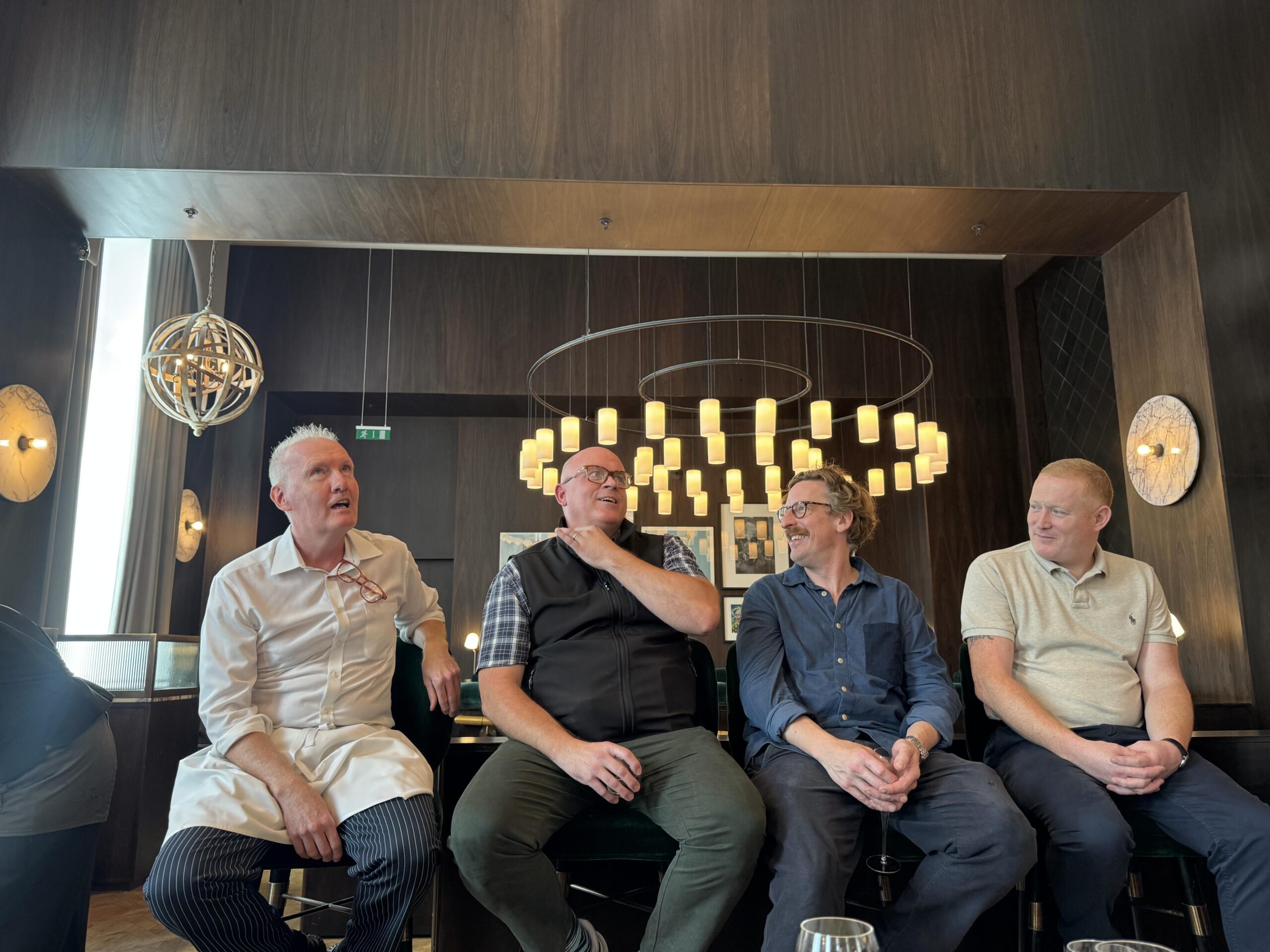
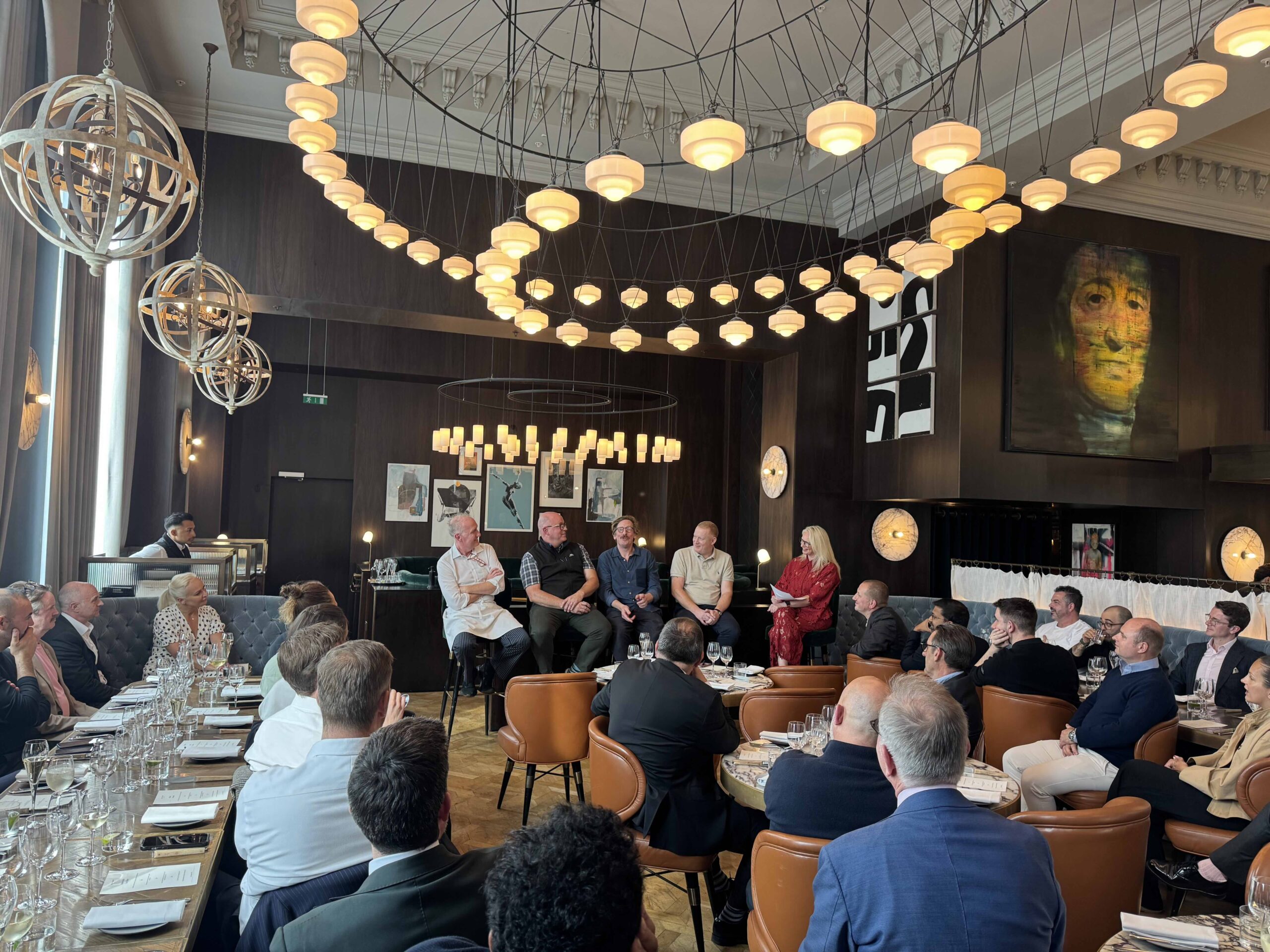
The panel, hosted by Bronwyn Groves at Michelin-starred Wild Honey St James, brought together Chef Anthony Demetre of Wild Honey, Chef David Stevens, Executive Chef at Simpson’s in the Strand, Chef Neil Borthwick, Head Chef at The French House, and Chef Andrew Sawyer, Executive Chef at Brown’s Hotel.
Their answers kept returning to four things: who you hire and how you keep them, who you buy from, how the seasons are changing, and how much of a chef’s day is still spent away from the kitchen.
Before any of that, though, each chef was asked about the best part of the job.
Neil’s answer set the tone: when a customer leaves happy, having eaten something delicious and been well looked after. “It doesn’t have to be fancy,” he said. And as he reminded the room, the best menu in the world is worthless without everyone behind it, from the pot wash up.
Hire for attitude, then train
Recruitment came up as the first challenge. Anthony has worked in kitchens since the late 1980s and said that “recruitment has always been challenging”. What has changed is who comes through the door. Younger chefs want to work hard, he said, but they also want to travel, and some will spend a year or so in a kitchen before taking time out.
That cuts against what a kitchen needs most. “For me as an employer, you strive for stability, continuity, consistency.” His answer has been to change the job rather than wait for people to change: a fixed working week with overtime paid, and encouraging his team to have a life outside the kitchen, something his generation rarely had.
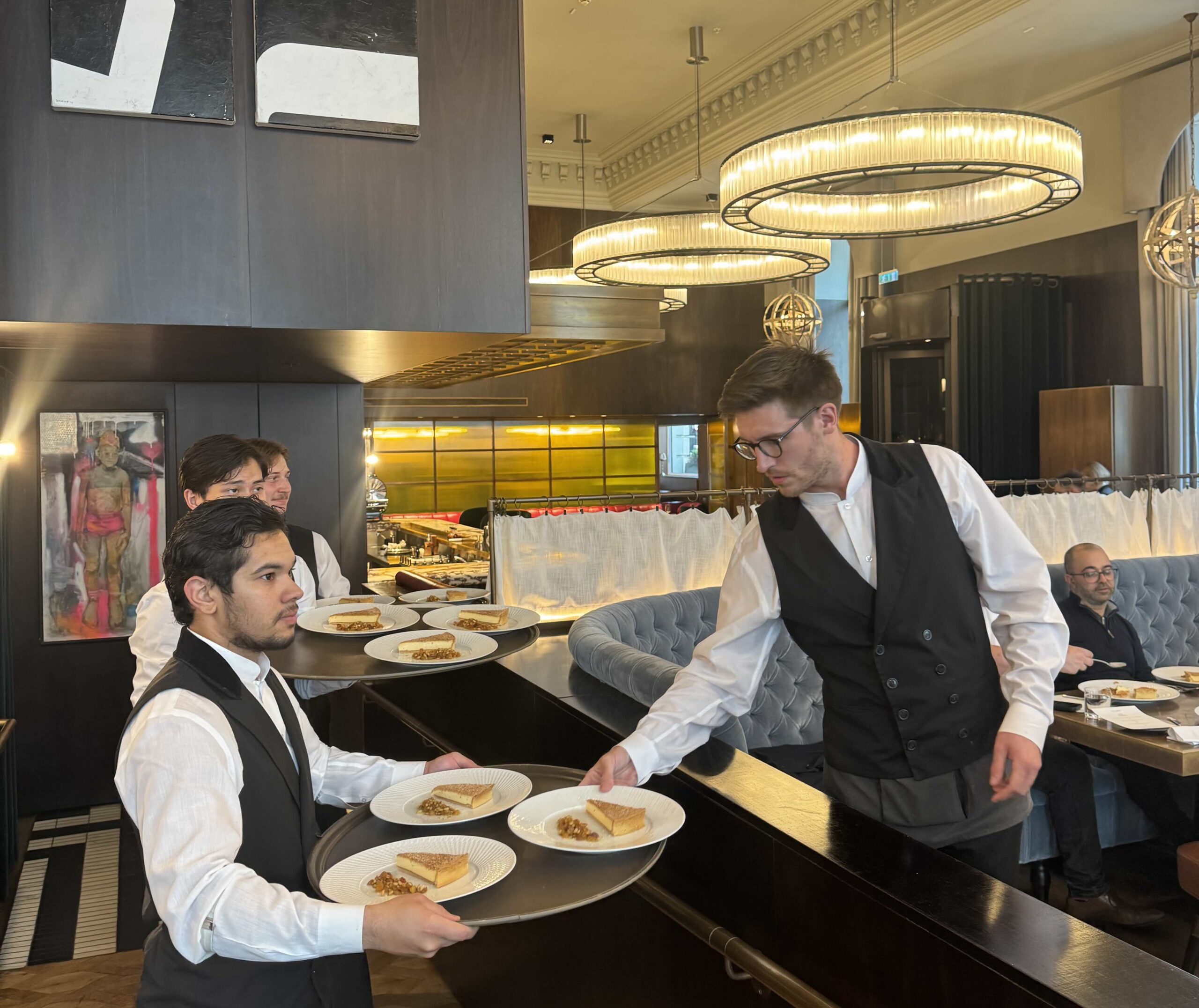
David described the same shift at the point of hiring. When Simpson’s in the Strand recruited its brigade of 50 chefs for opening, more than 600 people applied. The team set one rule: “We are going to employ on attitude. We can train almost everything else.” He was just as firm that training comes first. Knowledge is easier to find than ever, but young chefs need solid grounding in technique.
Andrew hand-picks his apprentices from college and said watching them progress is the best part of his job right now.
Neil added a point every senior chef will recognise: young cooks need room to make a few mistakes, because that is how they learn. He also made the case for openness about the numbers, arguing that young chefs who understand how a business makes money, and share in it through bonus schemes, are more motivated and better prepared to run kitchens of their own.
Anthony put the world of the kitchen into theatrical terms. A kitchen has two performances, a matinee and an evening, and it has to be the same show every time. That consistency is what good recruitment and good training are for.
Suppliers are partners
Rising costs have been a real challenge for the last few years. Prices are volatile, and some staples will rise no matter what a chef does.
David’s answer was careful menu engineering, seasonal produce and a daily conversation with suppliers: “Long term relationships with suppliers. I can’t stress it enough. Everybody talks about it, but people don’t do it.” Some of his have lasted more than 20 years.
The value, he said, shows when something goes wrong. There is a conversation, rather than a switch to whoever is a few pence cheaper per kilo.
Andrew agreed, reminding the room that suppliers have bills to pay too and that trust runs both ways.
He sees his suppliers as experts: when his fish supplier calls about the best catch of the day, Andrew knows exactly what will arrive at the door.
Neil gave a recent example from The French House. When a delivery of sardines wasn’t up to standard, a quick call to the supplier was all it took to have them credited, no argument.
Neil also passed on some advice from his friend Mark Hix: find a great ingredient, cook it well, and don’t mess with it. Diners, he believes, will keep coming back for exactly that.
Cook with the seasons, as they change
Strong supplier relationships are also what make seasonal cooking work, and the seasons themselves are shifting. Andrew described warmer waters bringing species to UK coasts that chefs wouldn’t have seen a few years ago, while familiar produce arrives early or finishes late. On the morning of the lunch he had picked up a 2.5kg bonito, a fish that would rarely have turned up before.
His response is to adapt quickly. Menus at Brown’s now last a week or two rather than a whole season. Brown’s sources as much as possible from within a two-hour drive, with eggs going from farm to plate within 24 hours. The hotel also backs regenerative farming and pays deposits on future crops of strawberries, raspberries and blackberries, giving growers the security to invest.
Wild Honey works in the same spirit: Anthony writes its menu each morning around what its UK farmers and suppliers deliver.
Lets AI take the paperwork
No panel conversation in 2026 was going to avoid the impact of AI.
Anthony saw real concern for some roles, such as menu design. And also for young people trying to enter the job market, where a flood of AI-assisted applications makes it hard to stand out. But he was clear that the sector has to “embrace” it somehow.
In the kitchen itself, the panel saw AI as a way to give chefs time back. The feeling was that AI can take on the more mundane admin, from rotas and scheduling to ordering, so chefs can be in the kitchen where they should be, working with their teams, rather than sitting at a computer.
Backing the next generation
A question from the floor asked which up-and-coming chefs, and particularly young women, the panel would point students towards, since college students tend to name the same few famous faces.
Anthony said he is a great supporter of the new generation and spends his own money at small, independent restaurants rather than “temples of gastronomy”. Many brilliant young cooks, he argued, simply stay under the radar because they don’t have a PR machine behind them. He singled out husband-and-wife restaurants for their passion and integrity, and welcomed the recognition now coming to cities such as Bristol, Birmingham and Manchester.
David tipped Polly Norman, a chef at Simpson’s in the Strand who did well on MasterChef: The Professionals, as one to watch.
Neil predicted a return to small places doing simple, great food, often with just one or two people in the kitchen.
Desert Island Dishes
The last question from the floor was the simplest, yet it gave the chefs the most to chew over (pardon the pun..!):
What’s your desert island dish?
Anthony kept it classic with a good roast chicken, a green salad and fries, washed down with a bottle of Condrieu from the Rhône. For dessert he first said crème brûlée, then corrected himself to custard, confessing that anything custardy and creamy wins him over.
David went for baked Alaska, for the sheer theatre: “so simple, but so satisfying”.
Neil joked about it being “haggis” before settling on a full feast: côte de boeuf, a panzanella made with properly ripe, sun-grown tomatoes, a cheeseboard of French, English and Scottish cheeses, and a Madeleine to finish.
Andrew stayed true to his East London roots with pie, mash and liquor, which he called the UK’s original takeaway and something we should see far more of.
The same show, every service
One belief ran through the whole panel: a kitchen runs best when it is staffed by people who know it inside out, and whose consistency does not falter.
The standard a guest notices is set by everyone behind the menu. That comes from hiring people who understand the operation, service after service, so that every performance, whether lunch or dinner, truly delivers. It is exactly how Act-Clean thinks about cleaning too.
Act-Clean is proud to clean the kitchens and back-of-house areas at Wild Honey at Sofitel London St James, Simpson’s in the Strand for Jeremy King, and Charlie’s at Brown’s Hotel. Our thanks also go to Neil, who kindly hosted our first Chefs’ Lunch at The French House in 2025.
Thank you to our chef panel, to Chef Anthony Demetre and the Wild Honey team for hosting our first Turning Up the Heat session, and to everyone who joined us for a truly special afternoon.
#teamwithintheteam