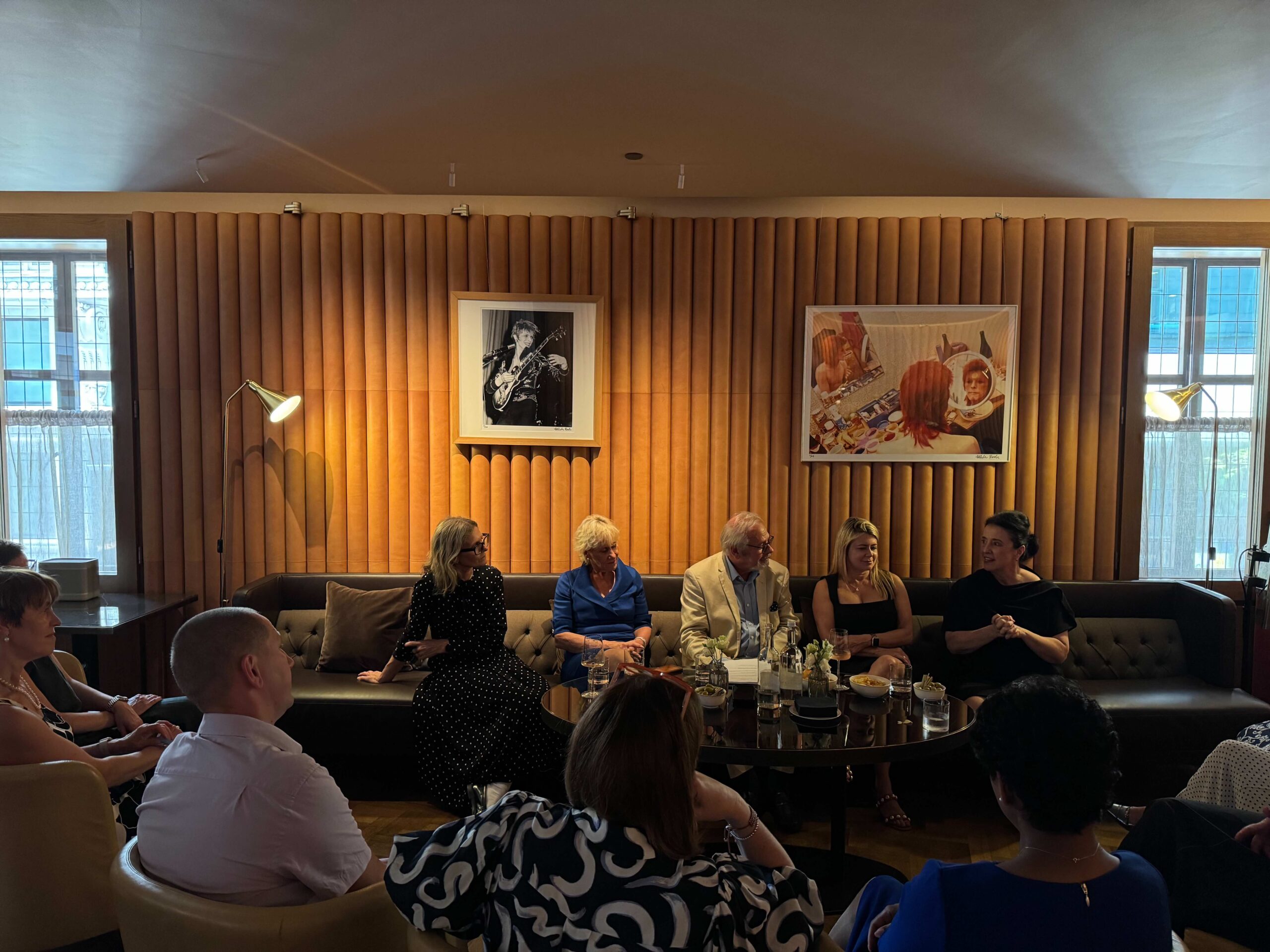
Great conversations happen when the right people are in the room, and that is exactly what we saw at our recent panel, where some of London’s most respected housekeeping leaders sat down to talk candidly about the challenges, opportunities and changes shaping their profession.
From protecting standards under cost pressure to attracting the next generation, London’s leading housekeeping voices shared what should be high on the agenda in the months ahead.
We were lucky to be joined by four leaders who, between them, represent some of London’s most iconic hotels: Jenny Moussi, Senior Director of Housekeeping at Four Seasons, Natalie McNally, Director of Housekeeping at The Chancery Rosewood, Fernanda Lewis, Executive Head Housekeeper at The Goring, and Miriam Veroli, General Manager at Andaz London.
Housekeeping has always been fundamental to the hotel experience. But the role of the housekeeping leader is becoming broader, more commercial and, arguably, more important than ever.
From talent and rising costs to AI and the changing role of the housekeeper, here are five priorities emerging for the quarter ahead.
1. Protect your people and your standards
With labour costs continuing to rise, housekeeping departments are under pressure to find efficiencies. But for Fernanda Lewis, there is a point at which cutting costs starts to work against both standards and colleague wellbeing.
Fernanda did not shy away from a difficult truth. She spoke about the pressure some housekeepers face to reduce headcount as employment costs increase, resulting in fewer people being expected to clean more rooms.
The answer, she argued, is for housekeeping leaders to become stronger advocates for their departments.
“We need to have a voice. I would like to see housekeeping leaders be more recognised within their business.”
That means understanding the numbers, communicating the operational consequences of cuts, and being prepared to fight your corner when necessary. It’s a simple point, but a powerful one. Efficiency matters, but so does recognising when a short term saving risks becoming a false economy.
2. Make the colleague experience a retention strategy
Attracting and retaining talent remains one of hospitality’s biggest challenges. For Miriam Veroli, the answer starts with giving employees the same attention hotels give the guest experience.
At Andaz, that includes access to the hotel gym, monthly massages, and inviting chefs from renowned restaurants to cook for the team.
Miriam described the employee restaurant as “the most important restaurant in the hotel,” explaining:
“If you’re taking care of the colleagues, then of course they take care of guests.”
It is a simple concept, but one with powerful commercial implications. Retaining experienced people reduces turnover costs, protects knowledge and consistency, and ultimately supports the guest experience.
3. Build the next generation of housekeeping leaders
Recruitment is only part of the talent challenge. The industry also needs to make housekeeping a career young people actively aspire to.
For Natalie McNally, developing people and seeing them progress has been one of the proudest aspects of her career.
“We need for youngsters to want to come in and want to be directors of housekeeping.”
Natalie argued that the industry needs to do more to build that ambition and demonstrate the opportunities housekeeping can offer.
Perhaps no one in the room embodied that message better than Miriam herself. She began as a chambermaid at The Ritz London before progressing through housekeeping and rooms operations to become a General Manager. Her message was clear, a strong housekeeping background should be recognised as exceptional preparation for senior hotel leadership.
4. Claim housekeeping’s seat at the table
The responsibilities of a modern housekeeping leader extend far beyond bedrooms.
Jenny Moussi captured that evolution with characteristic humour, explaining that alongside being a Director of Housekeeping, she has increasingly become involved in people and culture, finance, guest relations and guest services, before adding psychologist, therapist, counsellor, social worker and comedian to the list.
Behind the humour is a serious point. Housekeeping leaders manage some of a hotel’s biggest teams and significant budgets, while directly influencing the guest experience.
Miriam agreed, that warrants representation at the highest level:
“We are the backbone of the hotel.”
She encouraged housekeeping leaders to push for a place at executive committee level, alongside the GM and Executive Chef, where the decisions affecting their people and operations are being made.
5. Be curious, but pragmatic, about technology
AI and robotics inevitably entered the conversation, but the mood was neither dismissive nor breathlessly optimistic.
Technology already has clear applications across hospitality, from answering guest queries to supporting administrative tasks. Robotics may also increasingly take on repetitive cleaning activities.
Yet housekeeping presents challenges technology still struggles to navigate. A robot might vacuum a floor, for example, but it cannot necessarily spot the cobweb in the corner or make the observations that allow a room attendant to personalise a guest’s stay.
Miriam nevertheless cautioned against complacency:
“I think we should be worried. There are robots out there cleaning rooms, it’s knocking on our door.”
The opportunity for housekeeping leaders is to understand where technology can genuinely support their people and productivity, without losing the human judgement and attention to detail on which great hospitality depends.
A bigger role for housekeeping
What became clear across the discussion is just how far the role of housekeeping has evolved. It is a people function, a commercial function and a leadership function, influencing some of the biggest teams, costs and guest touchpoints within a hotel.
We are grateful to Jenny, Natalie, Fernanda and Miriam for such an open and generous conversation, and proud to help create the space for these discussions to happen. The next quarter is an opportunity for housekeeping leaders not only to respond to the pressures facing their departments, but to make sure their expertise and influence are recognised across the wider business. We are glad to be part of championing it.
If you’d like to find out more about how Act-Clean could become your #teamwithintheteam at your business, please get in touch.